The so-called copper filling is to use the idle space on the PCB as a reference plane, and then fill it with solid copper. These copper areas are also called copper filling. Copper pouring is divided into large-area copper pouring and grid copper pouring. Below, let professional PCB manufacturers explain the basic knowledge of PCB circuit board copper cladding for you:
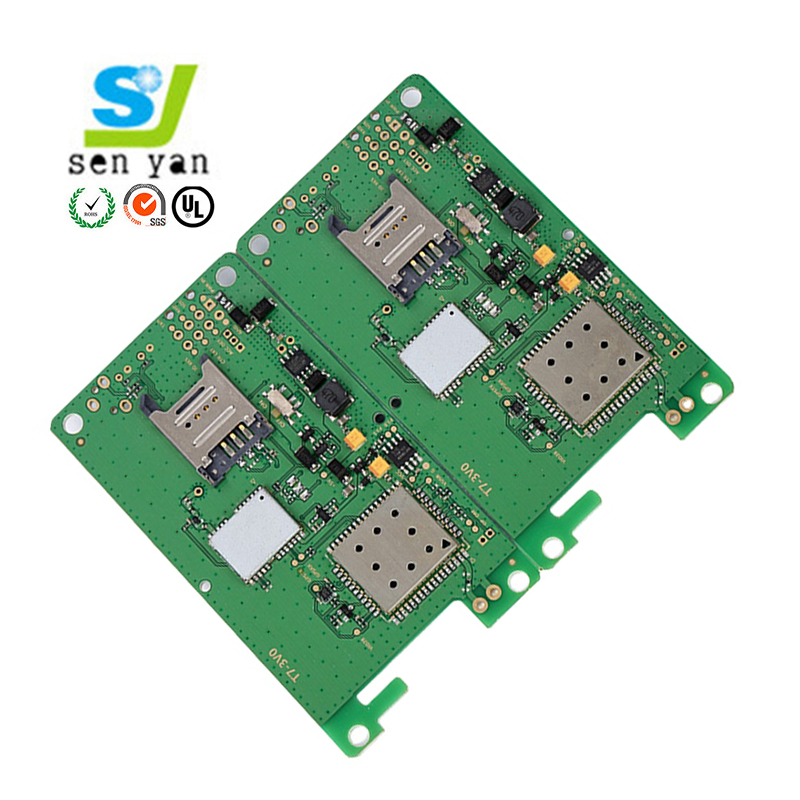
一. Problems that need to be paid attention to when pouring copper:
1. Single-point connection of different grounds: through 0 ohm resistance, magnetic beads or inductance.
2. Pour copper near the crystal oscillator. The crystal oscillator in the circuit is a high-frequency emission source. Copper should be placed around the crystal oscillator, and then the shell of the crystal oscillator should be grounded separately.
二. What are the benefits of copper cladding?
1. Copper cladding can reduce ground wire impedance and improve anti-interference ability;
2. Reduce voltage drop and improve power efficiency;
3. Connect with the ground wire to reduce the loop area.
三. Is it better to pour copper on a large area or to pour copper on a grid?
This issue cannot be generalized, and specific issues should be analyzed in detail, and it does not matter which one is better. For example, at the beginning of wiring, the ground wires should be treated equally, and the ground wires should be routed well when routing. If grid copper is used at this time, these ground wires will affect the appearance. For a large area of copper pouring, if the board is subjected to wave soldering, the board may warp or even bubble. From this point of view, the heat dissipation of grid copper is better. Usually, high-frequency circuits have high anti-interference requirements for multi-purpose grid copper cladding, and low-frequency circuits with large current circuits are commonly used for complete large-area copper cladding.